Chapter 8 · Grow guide
Water and pH
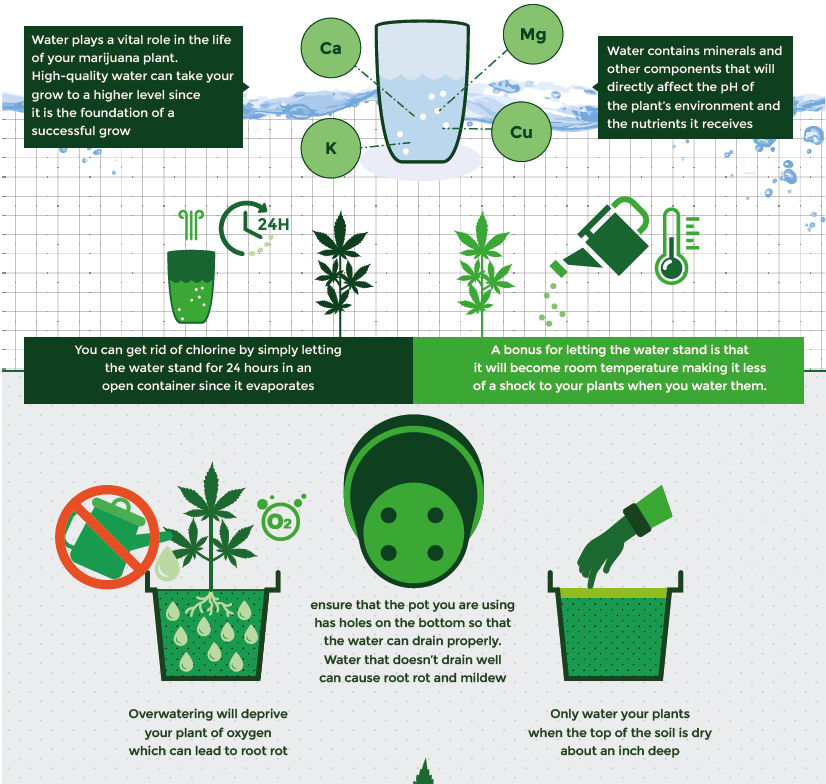
Water plays a vital role in the life of your marijuana plant. High-quality water can take your grow to a higher level since it is the foundation of a successful grow. Not enough water, too much water, and poor quality water can all cause the death of your plant, so it is important to know what is in your water and your plant’s water needs.
The quality of water varies according to your source and where you live. Water contains minerals and other components that will directly affect the pH of the plant’s environment and the nutrients it receives. One of the components that are added to the water supplied by cities is chlorine, which is bad for your plant. Letting the water stand in an open container also brings it to room temperature, making it less of a shock to your plants when you water them. If your water source has a lot of chlorine, consider using anti-chlorine treatment to protect your plants from potential harm.
Water your plant correctly
When you water your plant be sure to be thorough. Pour water evenly around the soil, making sure that the water gets all the way to the deepest roots. If the bottom roots do not receive water then they will begin to turn upwards attempting to get to the water. Another important thing to note about watering your plants is that you need to ensure that the pot you are using has holes on the bottom so that the water can drain properly. Water that doesn’t drain well can cause root rot and mildew. As a new grower, you may have the urge to constantly give your plant water, but avoid doing this, or else you risk killing it. Overwatering will deprive your plant of oxygen which can lead to root rot. Only water your plants when the top of the soil is dry about an inch deep.
Your plant’s pH is important
Measuring the pH of the runoff water will tell you how alkaline or acidic the plant’s environment is. Use one consistent set of targets: in soil, keep the pH between 6.0 and 7.0, and aim for the middle of that range, around 6.5 (source 1; another university extension puts the sweet spot for most cultivated plants at 6.0-6.8, source 2). In hydroponics, coco and other soilless media the target is lower, between 5.5 and 6.5; published cannabis trials adjusted their nutrient solution to pH 5.8 or 6.0 (sources 7 and 8). The pH is especially important because a good pH helps the plant take up nutrients. It’s useless to have a lot of nutrients in your medium if the pH is off, because then the plant can’t use them. If the pH is too high or low the symptoms can look like a nutrient problem, which is why you should check the pH from time to time to avoid a misdiagnosis.
How to fix an incorrect pH
If you find that your pH is too high or low it can be corrected. Use a pH “up” or pH “down” product made for plants and follow its label. Add small amounts, stir, and measure again before you water; the runoff should come back into the range above. Change the pH gradually rather than in one big step, because a sudden swing stresses the roots.
The water you use is the lifeline of your plant. Always be mindful when giving your plant water so that you do not over-water or under-water it. Also, keep in mind that pH plays a very important role in the success of your plants. You can prevent problems with your plant by checking the pH regularly.