What is cannabis Ruderalis?
Cannabis ruderalis is a small wild cannabis from Russia and Eastern Europe that flowers by age, not day length. How it gave us autoflower seeds.
Contents
- Where does ruderalis come from?
- What does the name ruderalis mean?
- What does a ruderalis plant look like?
- Ruderalis vs indica vs sativa: what is the difference?
- How did ruderalis give us autoflower seeds?
- What does the research say about the autoflower trait?
- Why does flowering by age matter for growers?
- Can you grow pure ruderalis?
- Autoflower, feminized or regular: which seeds should you pick?
- Frequently asked questions
Cannabis ruderalis is a small, wild type of cannabis from Russia and Central and Eastern Europe that flowers by age instead of by day length. Botanists still debate whether it is its own species or a subspecies of Cannabis sativa. It has relatively low THC and is rarely grown for recreational use. Still, it matters to anyone who grows autos, because breeders crossed it with indica and sativa strains to make the autoflowering plants that now fill seed catalogues.
Where does ruderalis come from?
The plant was first described in 1924 by the Russian botanist D. E. Janischewsky. He was studying wild cannabis in the Volga River system and named ruderalis from plants he found in southern Siberia, as the Wikipedia entry on Cannabis ruderalis sets out.
Read also: Everything you need to know about cannabis Ruderalis · Uneven Autoflower Growth: What Is Normal?
Wild populations still grow in Ukraine, Lithuania, Belarus, Latvia, Estonia and nearby countries. The plant also turns up here and there in the US and Canada, mostly in the Midwest. Wherever it grows, it does not wait for the days to shorten. It flowers by age.
What does the name ruderalis mean?
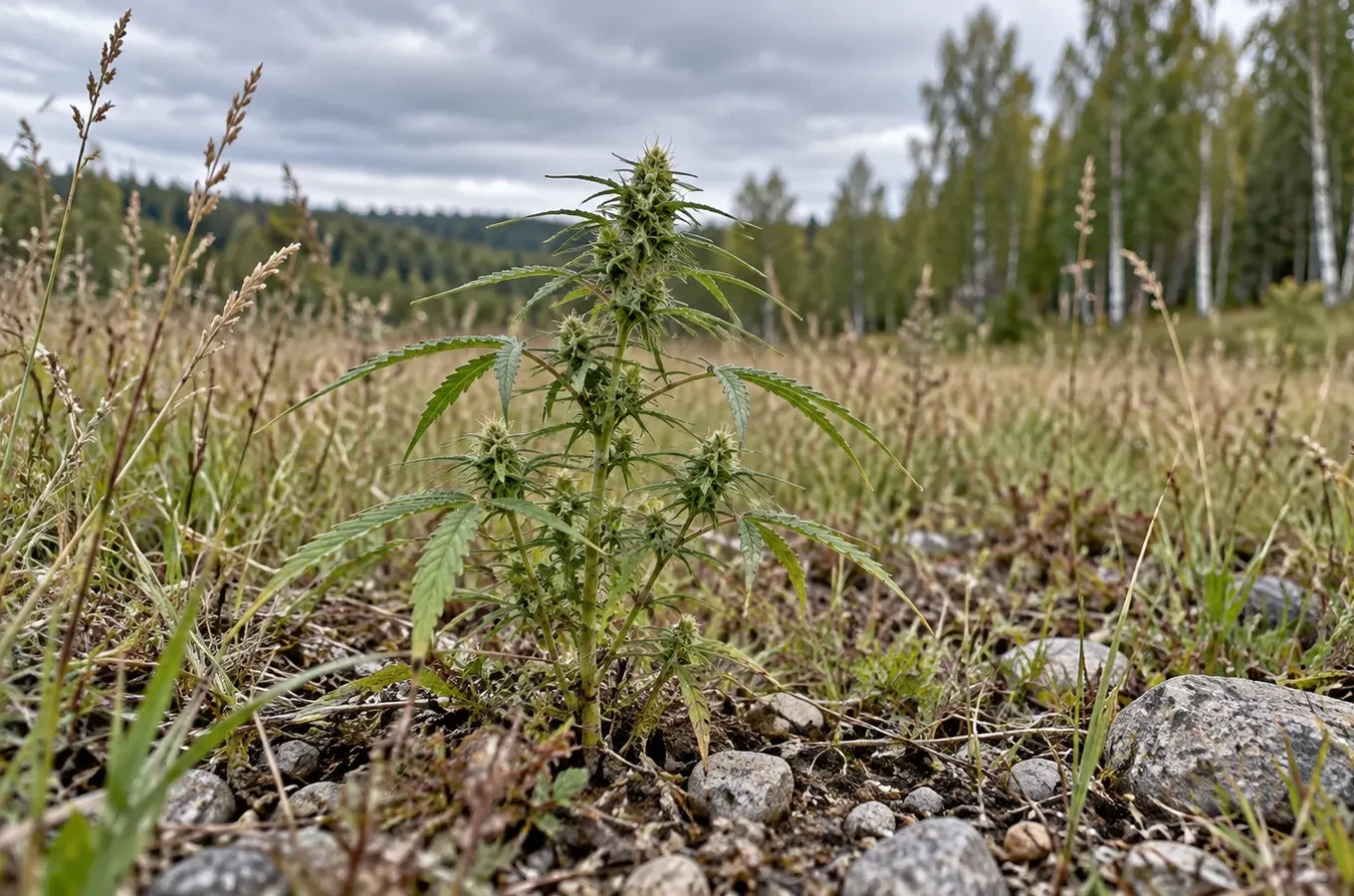
The name comes from the Latin word rudera, the plural of rudus, which means rubble. In botanical Latin, ruderalis means "weedy" or "growing among waste". Botanists call a plant ruderal when it is one of the first to colonise ground after a disturbance.
For this plant the name fits. A ruderal is one of the first to arrive on disturbed ground, and ruderalis is small and quick to mature.
What does a ruderalis plant look like?
Pure ruderalis is small. It rarely grows taller than about 60 cm (2 feet). The stems are thin and slightly fibrous, with little branching, and the foliage is open with fairly large leaves.
What stands out most is speed. A ruderalis plant typically reaches maturity 5 to 7 weeks after it is planted from seed. It gets there without any change in light, because it doesn't need a photoperiod to start flowering. Indica and sativa plants flower when the nights get longer. Ruderalis flowers when it is old enough.
Its chemistry is different too. Ruderalis has relatively low THC and is often high in CBD.
Ruderalis vs indica vs sativa: what is the difference?
Most growers know the indica vs sativa split. Ruderalis is the third name that comes up, and these are the differences that matter in practice:
- What triggers flowering: indica and sativa plants are photoperiod plants. They flower when the dark period gets long enough. Ruderalis flowers by age.
- Size: wild ruderalis rarely gets past about 60 cm.
- THC and CBD: ruderalis is relatively low in THC and often high in CBD. That is why ruderalis is rarely grown for recreational use.
- Origin: ruderalis comes from Russia and Central and Eastern Europe.
Whether ruderalis counts as a separate species is still open. Some scholars treat it as its own species, others see it as a subspecies of Cannabis sativa, and there is no consensus.
How did ruderalis give us autoflower seeds?
The result is the autoflower: a plant that flowers by age, whatever the light schedule. For the full picture of how these plants work, read what are autoflower seeds.
What does the research say about the autoflower trait?
Growers have long described autoflowering as a simple recessive trait. Recessive means a plant only autoflowers when it carries the trait from both parents. So a first cross between an autoflower and a photoperiod plant usually doesn't autoflower.
Lab work now backs up what growers described. Two studies, from 2022 and 2024, looked at the genetics behind the trait. In 2022 a Cornell University team mapped the locus behind autoflowering and named it Autoflower1 (Toth et al., 2022). They also built DNA marker tests that breeders can use.
In 2024 a second team found a splice site mutation in autoflowering cannabis, in PRR37, a gene that is part of the plant's circadian clock (Leckie et al., 2024). They point out that autoflowering makes outdoor growing possible at high northern latitudes. They also report that the autoflowering plants they studied often had lower cannabinoid content and poorer flower quality.
Why does flowering by age matter for growers?
Indica and sativa plants flower when the dark period gets long enough. An autoflower flowers by age instead, whatever the light schedule, and that makes a few things simpler:
- Short summers: autos suit the north, where summers are short. The 2024 PRR37 study makes the same point: autoflowering makes outdoor growing possible at high northern latitudes.
- A first grow: there is no light schedule to get right, which makes a first grow a lot easier.
Can you grow pure ruderalis?
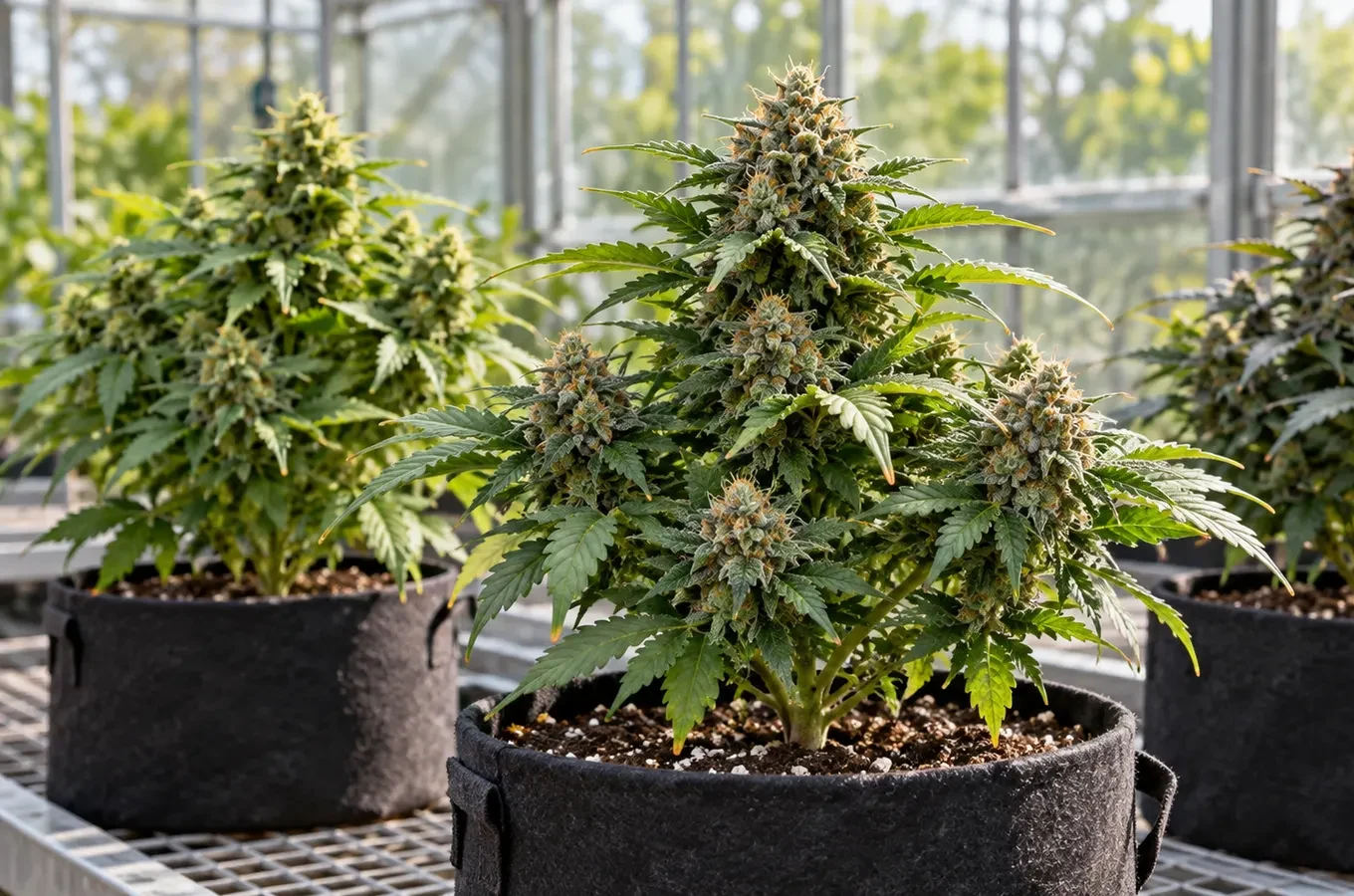
If the speed and the easy flowering are what attract you, grow a modern autoflower instead. You get the same flowering without a light switch, on a plant that grows to 70 to 120 cm indoors. Our guide on how to grow autoflower cannabis takes you through it step by step. For other wild genetics, read our guide to landrace cannabis strains.
Autoflower, feminized or regular: which seeds should you pick?
- Autoflower seeds flower by age, thanks to the ruderalis in their background. They make a first grow a lot easier, because there is no light schedule to manage, and they suit places with short summers. Expect a listed flowering time of 6 to 10 weeks and plants of about 70 to 120 cm indoors, depending on the strain.
- Feminized seeds grow into photoperiod plants. They flower when the dark period gets long enough, so flowering follows the light schedule. In principle they always give more than autos.
- Regular seeds are Jan's own favourite, together with pure landrace strains.
If you are still in doubt between the first two, our feminized vs autoflower guide puts them side by side. For a first grow we would start with an autoflower, as Jan's advice above says.
Frequently asked questions
Is ruderalis indica or sativa?
Not in the way growers use those words. Some scholars treat ruderalis as its own species and others see it as a subspecies of Cannabis sativa, and there is no consensus. In the grow room it differs from both in one big way: indica and sativa flower when the nights get longer, while ruderalis flowers by age.
Can I grow autoflowers in the UK climate?
Short summers suit autos, because they flower by age instead of waiting for the days to shorten. The law is a separate question. In the UK, section 6 of the Misuse of Drugs Act 1971 says it is not lawful to cultivate any plant of the genus Cannabis. Laws on seeds differ per country and change, so check your local law.